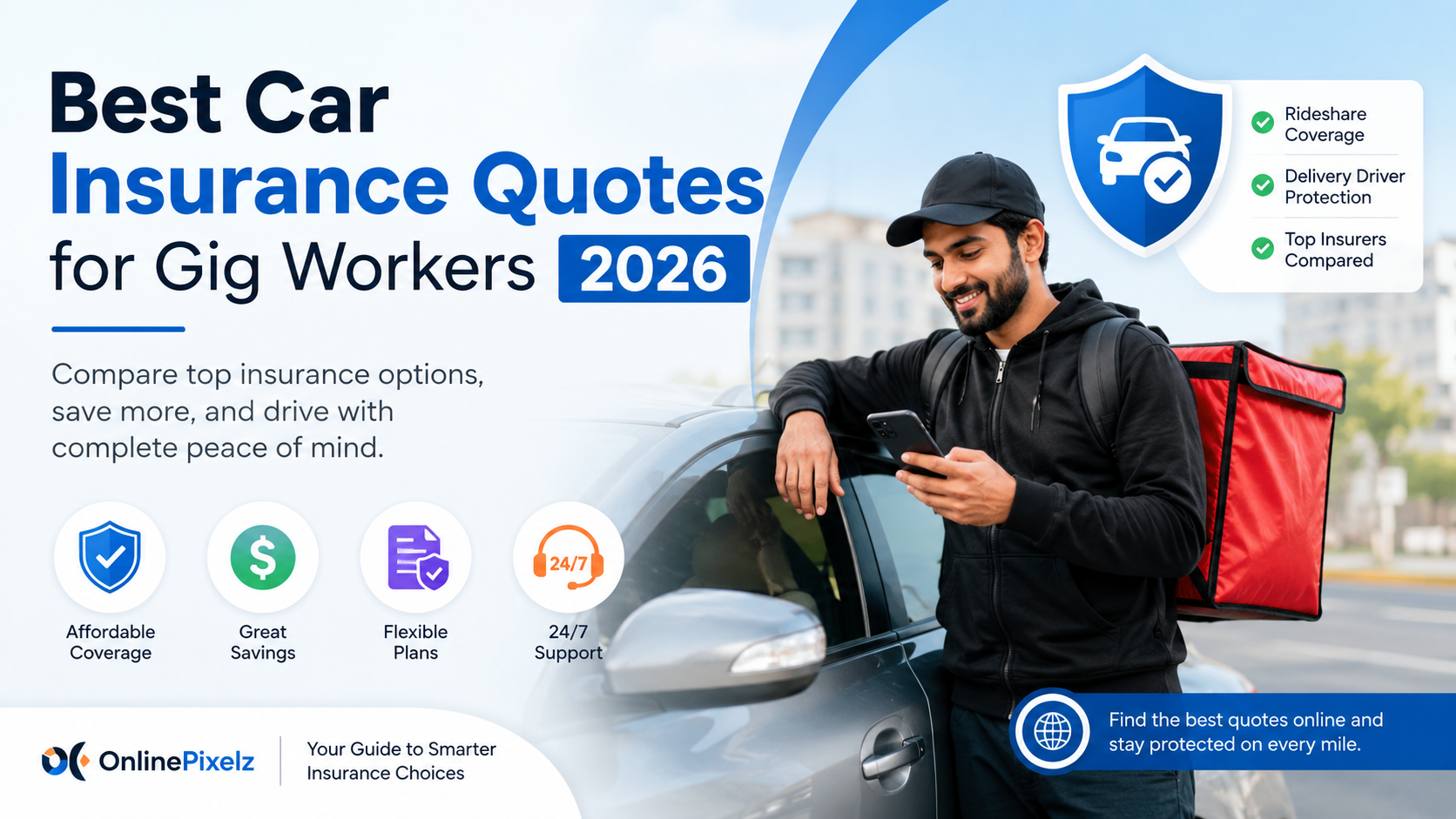
Understanding Insurance Needs in the Gig Economy
The gig economy has transformed the way millions of people earn income. Whether someone drives for Uber, Lyft, DoorDash, Instacart, Amazon Flex, or operates as an independent courier, personal vehicles have become business assets. Standard personal auto insurance policies often exclude commercial activities, meaning drivers could face denied claims if an accident occurs while working. This creates a significant financial risk that many new gig workers overlook until it is too late.
Insurance companies have responded by introducing hybrid products that bridge the gap between personal and commercial coverage. Many insurers now offer rideshare endorsements, delivery driver coverage, and usage-based insurance (UBI) programs designed specifically for flexible workers. The growing popularity of telematics allows insurers to price policies based on actual driving habits rather than broad demographic assumptions. This shift particularly benefits careful drivers who spend many hours on the road but maintain safe driving records.
According to recent industry developments, insurers continue expanding digital quoting systems and telematics-based pricing throughout 2026, giving gig workers greater flexibility and more personalized premiums. Insurance technology is becoming increasingly data-driven, rewarding responsible driving behavior rather than simply penalizing high annual mileage.
Why Traditional Auto Policies Often Fall Short
A standard personal auto policy is designed for commuting, shopping, and recreational travel. Once a vehicle begins generating income, the risk profile changes significantly. Frequent driving increases accident exposure, and transporting passengers or commercial goods introduces additional liability. As a result, many insurers exclude coverage during commercial activities unless the policy specifically includes rideshare or delivery endorsements.
For rideshare drivers, insurance coverage typically changes depending on whether the app is off, waiting for a ride request, en route to a pickup, or transporting a passenger. These changing coverage periods create potential gaps that specialized gig-worker insurance is designed to fill. Delivery drivers face similar challenges, especially when transporting food, groceries, or parcels.
Understanding these policy distinctions is essential because the cheapest quote is not always the best value. A lower premium that excludes commercial activity may ultimately provide no protection when it matters most.
Gig Work Categories That Affect Premiums
Insurance pricing differs depending on the type of gig work performed.
| Gig Work | Risk Level | Typical Coverage Need |
|---|---|---|
| Rideshare Drivers | High | Rideshare Endorsement |
| Food Delivery | Medium-High | Delivery Coverage |
| Courier Services | High | Commercial Auto |
| Freelance Business Travel | Medium | Business Use Coverage |
| Real Estate Agents | Medium | Business Mileage Coverage |
Drivers covering more annual miles generally receive higher quotes because insurers associate additional road exposure with greater accident probability. Electric vehicle owners may experience different pricing due to repair costs, battery replacement expenses, and specialized repair networks.
How Car Insurance Quotes Are Calculated in 2026
Insurance companies now evaluate far more than age and driving history. Modern pricing models increasingly incorporate real-time driving behavior through smartphone apps and connected vehicle technology. Speed consistency, hard braking, rapid acceleration, nighttime driving frequency, and annual mileage all contribute to premium calculations.
Artificial intelligence has also improved underwriting efficiency by enabling insurers to evaluate thousands of risk variables within seconds. Many companies now provide personalized quotes almost instantly after drivers enter basic information. These advances have increased pricing competition while improving quote accuracy.
Safe drivers who participate in telematics programs often qualify for meaningful discounts because insurers can verify actual driving habits rather than relying solely on statistical assumptions.
Factors That Influence Your Premium
Several major variables determine the final insurance quote:
- Driving history
- Annual mileage
- Credit score (where permitted)
- Vehicle type
- Geographic location
- Gig work frequency
- Claims history
- Deductible selection
- Coverage limits
- Participation in telematics programs
Each insurer assigns different weights to these variables, making quote comparison especially valuable.
EV Drivers vs. Traditional Vehicle Owners
Electric vehicles continue gaining popularity among gig workers because of lower fuel costs and reduced maintenance requirements. However, insurance pricing remains mixed. EV repairs often require specialized technicians and expensive battery components, increasing claim severity. At the same time, many electric vehicles include advanced safety systems that reduce collision frequency.
As insurers collect more claims data from electric vehicles, pricing models continue evolving. Some insurers now specifically reward EV ownership with discounts while others maintain higher premiums because repair costs remain elevated.
Best Insurance Options for Different Gig Workers
The ideal insurance policy depends entirely on driving patterns.
Recommended Coverage for Rideshare Drivers
Drivers transporting passengers should prioritize:
- Personal auto policy
- Rideshare endorsement
- Collision coverage
- Comprehensive coverage
- Uninsured motorist protection
- Medical payments coverage
These coverages help minimize gaps during transitions between personal and commercial driving.
Food Delivery Drivers
Delivery drivers generally require commercial-use endorsements rather than full commercial auto insurance unless deliveries constitute full-time employment. Flexible delivery schedules often pair well with usage-based insurance because premiums reflect actual driving behavior.
Freelancers Using Personal Vehicles
Professionals such as photographers, consultants, sales representatives, and real estate agents often qualify for business-use endorsements instead of commercial policies. These endorsements provide broader protection without the higher premiums associated with commercial fleets.
Comparing Insurance Quotes Effectively
Price should never be the only comparison factor. Coverage limits, deductibles, exclusions, claims satisfaction, digital services, roadside assistance, rental reimbursement, and customer support all influence long-term value.
A structured comparison table simplifies evaluation.
| Comparison Factor | Why It Matters |
|---|---|
| Monthly Premium | Ongoing affordability |
| Liability Limits | Financial protection |
| Deductible | Out-of-pocket costs |
| Commercial Coverage | Gig work eligibility |
| Claims Satisfaction | Customer experience |
| Mobile App | Policy management |
| Roadside Assistance | Emergency support |
Drivers should always compare identical coverage levels before selecting the lowest quote.
Coverage vs. Cost
Lower premiums frequently come with higher deductibles or reduced protection. Choosing insufficient liability limits may save money today but expose drivers to significant financial losses after a serious accident.
Evaluating total value rather than simply monthly cost leads to better long-term financial outcomes.
Common Mistakes to Avoid
Many gig workers unintentionally create coverage gaps by:
- Failing to disclose gig work
- Purchasing only minimum liability limits
- Ignoring deductibles
- Skipping uninsured motorist coverage
- Never reviewing policies annually
- Assuming employer apps provide complete protection
These mistakes often become expensive after an accident.
2026 Insurance Regulation Updates
Insurance regulation continues evolving alongside transportation technology. Regulators increasingly focus on pricing transparency, responsible AI usage, digital disclosures, and consumer protection. Usage-based insurance programs continue expanding while requiring stronger privacy safeguards.
Several jurisdictions are also improving disclosure requirements so consumers better understand when personal insurance ends and commercial coverage begins. These developments aim to reduce confusion surrounding rideshare and delivery coverage.
New Consumer Protection Rules
The insurance industry has introduced stronger transparency around digital quoting and policy disclosures. Consumers now receive clearer explanations regarding pricing factors, exclusions, and optional endorsements in many jurisdictions.
Greater regulatory oversight of AI-assisted underwriting also aims to improve fairness and reduce discriminatory pricing practices while maintaining accurate risk assessment.
Technology and Usage-Based Insurance
Usage-based insurance represents one of the most important developments for gig workers. Rather than relying exclusively on historical statistics, insurers increasingly measure real driving behavior.
Drivers demonstrating safe habits often receive substantial premium reductions, making telematics particularly attractive for full-time gig professionals.
Best Scenario-Based Recommendations
Budget-Conscious Drivers
Those seeking affordable coverage should prioritize:
- Higher deductibles
- Usage-based insurance
- Annual policy reviews
- Multiple quote comparisons
- Safe driving discounts
- Bundling policies where available
High-Mileage Professionals
Drivers exceeding 25,000 miles annually should emphasize comprehensive commercial protection rather than simply minimizing premiums. Increased road exposure substantially raises accident probability, making broader coverage financially worthwhile.
Insurance becomes a business investment rather than merely a legal requirement.
Conclusion
The best car insurance quote for a gig worker in 2026 depends on balancing affordability with comprehensive protection. Specialized rideshare and delivery endorsements have become increasingly important as millions of drivers use personal vehicles for commercial purposes. Advances in telematics, artificial intelligence, and digital underwriting have created more personalized pricing, allowing safe drivers to benefit from lower premiums while maintaining appropriate coverage. Comparing policies based on coverage quality, exclusions, customer service, deductible structure, and commercial protections produces better long-term value than focusing exclusively on price. As regulations continue evolving and insurers refine products for flexible workers, reviewing coverage annually remains one of the most effective ways to ensure both legal compliance and financial security.
Frequently Asked Questions
1. Do gig workers need commercial auto insurance?
Not always. Many drivers qualify for rideshare or delivery endorsements instead of full commercial policies.
2. Does food delivery require special insurance?
Yes. Personal auto policies frequently exclude delivery activities unless specifically endorsed.
3. Is usage-based insurance worth it?
For safe drivers, telematics programs often reduce premiums because pricing reflects actual driving behavior rather than general risk categories.
4. Are electric vehicles more expensive to insure?
Often yes, primarily because battery systems and specialized repairs increase claim costs, although discounts may offset some of the additional expense.
5. How often should gig workers compare insurance quotes?
At least once every year or whenever driving patterns, vehicles, or employment status change.
Recent industry updates: CMS finalized several Contract Year 2026 Medicare Advantage policy and technical changes affecting enrollment processes, Star Ratings, prescription drug coverage, and Special Needs Plans, while payment updates increased average Medicare Advantage plan payments for 2026. These healthcare regulatory changes are separate from auto insurance but illustrate the broader trend toward stronger consumer protections and clearer insurance rules in 2026.