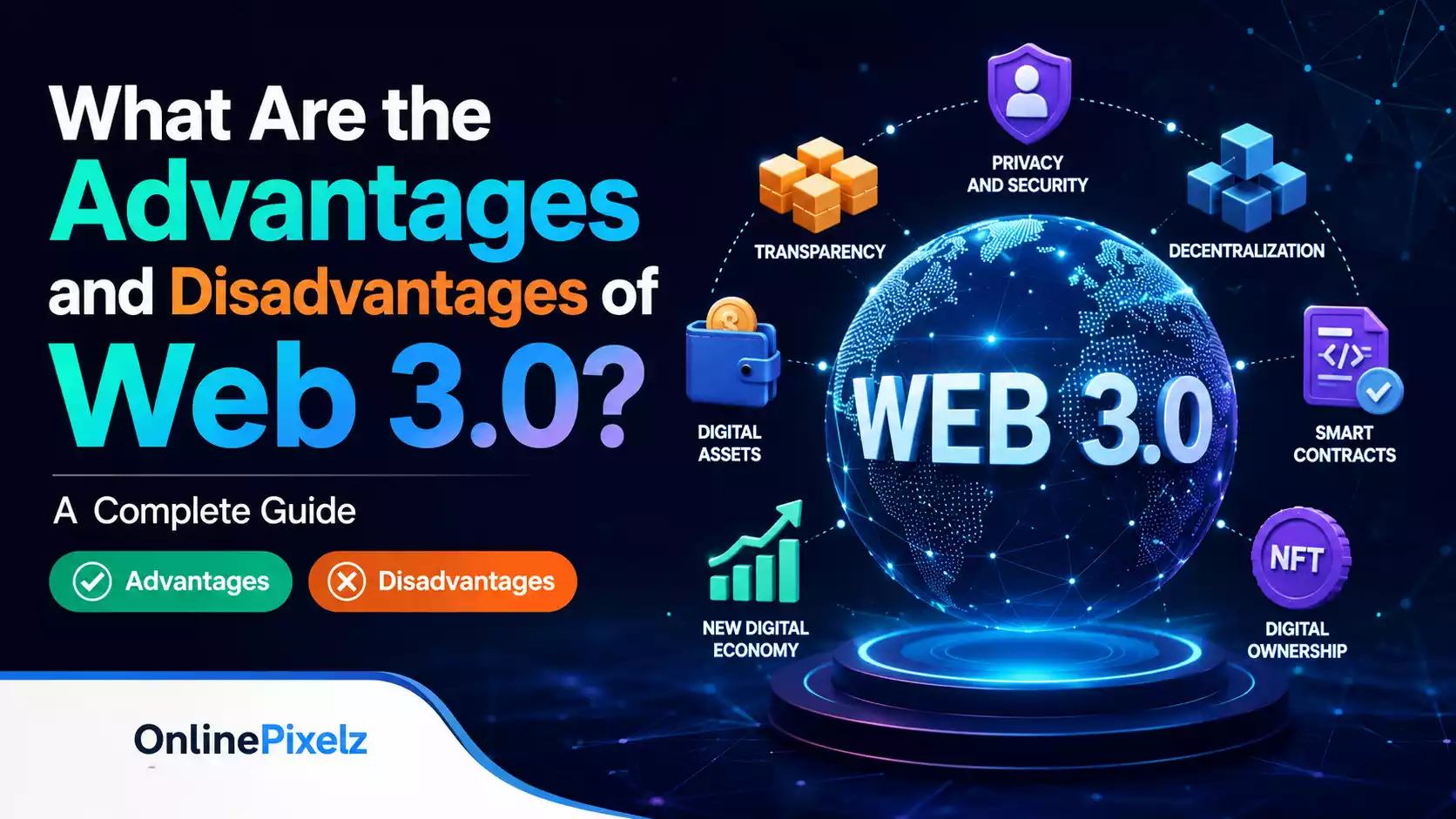
The internet has evolved dramatically over the past three decades. From static websites in the 1990s to social media and cloud-based applications today, each generation has transformed how people communicate, work, and conduct business. The next stage of this evolution is Web 3.0, often referred to as Web3.
Unlike Web 2.0, where a handful of technology companies control much of the world’s online data and services, Web 3.0 aims to create a decentralized internet powered by blockchain technology, artificial intelligence, smart contracts, and digital ownership. While supporters believe it gives users greater privacy and control, critics argue that it introduces complexity, scalability issues, and regulatory uncertainty.
Understanding Web 3.0
Web 3.0 represents the third generation of the internet where users gain more control over their digital identities, assets, and personal information. Instead of relying on centralized companies to store and manage data, Web 3.0 distributes information across blockchain networks and decentralized systems.
The journey began with Web 1.0, where websites were mostly static and users simply consumed information. Web 2.0 introduced interactive platforms such as social media, cloud computing, and online collaboration. While Web 2.0 made content creation easier, it also concentrated enormous amounts of user data in the hands of a few technology companies.
Web 3.0 attempts to solve these issues by combining blockchain technology, decentralized applications (dApps), smart contracts, artificial intelligence, and digital identities. The objective is not merely replacing Web 2.0 but creating an internet where ownership, transparency, and privacy become built-in features rather than optional services. Experts also emphasize that Web 3.0 is still evolving, meaning many of its technologies remain under active development and are not yet universally adopted.
Key Features of Web 3.0
Several technologies work together to define Web 3.0.
Decentralization
Instead of storing data on one company’s servers, Web 3.0 distributes information across thousands of computers worldwide. This reduces single points of failure and decreases dependence on centralized organizations.
Smart Contracts
Smart contracts are self-executing programs stored on blockchain networks. They automatically enforce agreements once predefined conditions are met, reducing the need for intermediaries.
Artificial Intelligence
AI helps Web 3.0 understand user intent, personalize search results, improve automation, and make online experiences more intelligent than traditional web applications.
These technologies collectively enable decentralized finance (DeFi), blockchain gaming, NFTs, decentralized autonomous organizations (DAOs), digital identities, and many emerging online services.
Advantages of Web 3.0
Better Data Ownership
Perhaps the biggest advantage of Web 3.0 is that users regain ownership of their personal data. Instead of social media companies collecting and monetizing user information, individuals control who accesses their data and under what conditions.
Blockchain-based digital identities allow users to authenticate themselves without repeatedly sharing sensitive information. This reduces dependency on centralized databases and improves overall privacy.
Enhanced Privacy
Privacy has become one of the biggest concerns on today’s internet. Web 3.0 addresses this issue through cryptographic technologies that protect user identities and transactions.
Since decentralized applications don’t always require centralized user accounts, individuals have greater control over what information they reveal online.
Greater Transparency
Every blockchain transaction is permanently recorded on distributed ledgers that can be independently verified. This transparency improves trust because users can inspect transaction histories instead of relying solely on company statements.
Industries such as supply chain management, finance, healthcare, and voting systems may benefit from this increased transparency.
Improved Security
Decentralized architectures reduce the risk associated with centralized data breaches. Attackers cannot compromise a single server to obtain millions of user records because information is distributed across many nodes.
Blockchain cryptography also makes unauthorized data modification extremely difficult.
New Digital Economy
Web 3.0 enables entirely new business models through cryptocurrencies, NFTs, decentralized finance, tokenized assets, and creator economies.
Artists can sell digital works directly to buyers. Developers can build decentralized applications without relying on traditional app stores. Financial services become accessible through decentralized protocols operating around the clock.
Some of the major advantages include:
| Advantage | Benefit |
|---|---|
| Data Ownership | Users control personal information |
| Transparency | Public verification of transactions |
| Privacy | Less dependence on centralized platforms |
| Security | Reduced single-point failures |
| Decentralization | Greater resilience |
| Smart Contracts | Automated agreements |
| AI Integration | Personalized experiences |
| Digital Assets | New economic opportunities |
Industry analysts consistently identify user control, transparency, decentralization, resilience, privacy, and AI-driven personalization among the most promising benefits of Web 3.0.
Disadvantages of Web 3.0
Despite its promise, Web 3.0 also faces significant challenges.
Technical Complexity
Most Web 3.0 applications require users to understand digital wallets, private keys, blockchain addresses, gas fees, and decentralized authentication.
For average internet users accustomed to simple login systems, this learning curve remains one of the biggest barriers to adoption.
Scalability Issues
Many blockchain networks struggle with processing large transaction volumes.
Compared to centralized payment systems capable of handling thousands of transactions per second, several blockchain networks experience slower speeds and higher transaction fees during periods of heavy usage.
Regulatory Challenges
Governments worldwide continue developing regulations surrounding cryptocurrencies, decentralized finance, digital assets, and blockchain governance.
Because decentralized applications often operate across multiple jurisdictions, legal compliance remains uncertain in many regions.
Security Risks
Although blockchain itself is highly secure, surrounding infrastructure may not be.
Users remain vulnerable to:
- Wallet theft
- Phishing attacks
- Smart contract vulnerabilities
- Fraudulent decentralized applications
- Private key loss
Unlike traditional banking systems, lost private keys generally cannot be recovered.
High Infrastructure Costs
Certain blockchain networks require substantial computing resources.
Although newer consensus mechanisms have reduced energy consumption, infrastructure costs, network maintenance, and specialized hardware still present challenges for widespread adoption.
| Challenge | Impact |
|---|---|
| Complexity | Difficult for beginners |
| Scalability | Slower transaction speeds |
| Regulation | Legal uncertainty |
| Security | Wallet and smart contract risks |
| Cost | Infrastructure expenses |
| Adoption | Limited mainstream usage |
Technology experts continue to identify usability, scalability, interoperability, security, and regulatory uncertainty as major obstacles preventing widespread Web 3.0 adoption.
Web 2.0 vs Web 3.0
| Feature | Web 2.0 | Web 3.0 |
|---|---|---|
| Data Ownership | Platform owns data | User owns data |
| Infrastructure | Centralized servers | Decentralized networks |
| Authentication | Username & password | Digital wallets & decentralized identity |
| Payments | Banks & payment gateways | Cryptocurrency & blockchain |
| Transparency | Limited | Public blockchain records |
| Governance | Company controlled | Community participation |
| Applications | Centralized apps | Decentralized applications (dApps) |
Future of Web 3.0
The future of Web 3.0 remains promising but uncertain.
Research continues to improve blockchain scalability, interoperability, decentralized identity, artificial intelligence integration, and privacy technologies. Large technology companies, financial institutions, startups, and governments are actively exploring blockchain applications beyond cryptocurrencies.
Several industries expected to benefit include:
- Banking and finance
- Healthcare
- Education
- Gaming
- Supply chain management
- Real estate
- Digital identity
- Government services
At the same time, mainstream adoption will likely depend on simplifying user experiences. Community discussions frequently point to difficult onboarding, wallet management, security concerns, and limited everyday use cases as reasons adoption has progressed more slowly than many early supporters expected.
Conclusion
Web 3.0 represents an ambitious vision for the future of the internet. By combining decentralization, blockchain, artificial intelligence, and smart contracts, it seeks to return control of data and digital assets to users while enabling greater transparency and new economic opportunities.
Its advantages include stronger privacy, improved security, greater transparency, digital ownership, and innovative decentralized applications. At the same time, technical complexity, scalability limitations, regulatory uncertainty, and security risks continue to slow mainstream adoption.
Rather than completely replacing Web 2.0 overnight, Web 3.0 is more likely to develop alongside existing internet technologies. As infrastructure improves and user experiences become simpler, its influence is expected to expand across industries, gradually reshaping how people interact with digital services.
Read: Vibe Coding: The Complete Guide to AI-Powered Software Development in 2026
Frequently Asked Questions
1. What is Web 3.0 in simple words?
Web 3.0 is the next generation of the internet that gives users more ownership of their data through blockchain, decentralization, and smart contracts.
2. What are the biggest advantages of Web 3.0?
The major benefits include better privacy, user data ownership, decentralization, transparency, improved security, and new digital business models.
3. What are the disadvantages of Web 3.0?
The biggest drawbacks include technical complexity, slower blockchain scalability, regulatory uncertainty, wallet security risks, and higher infrastructure requirements.
4. Is Web 3.0 replacing Web 2.0?
Not immediately. Web 3.0 is expected to coexist with Web 2.0 while gradually expanding into more applications and industries.
5. Is Web 3.0 only about cryptocurrency?
No. Although cryptocurrencies are an important part of Web 3.0, the ecosystem also includes decentralized applications, smart contracts, AI integration, digital identities, NFTs, decentralized finance, and blockchain-based services.